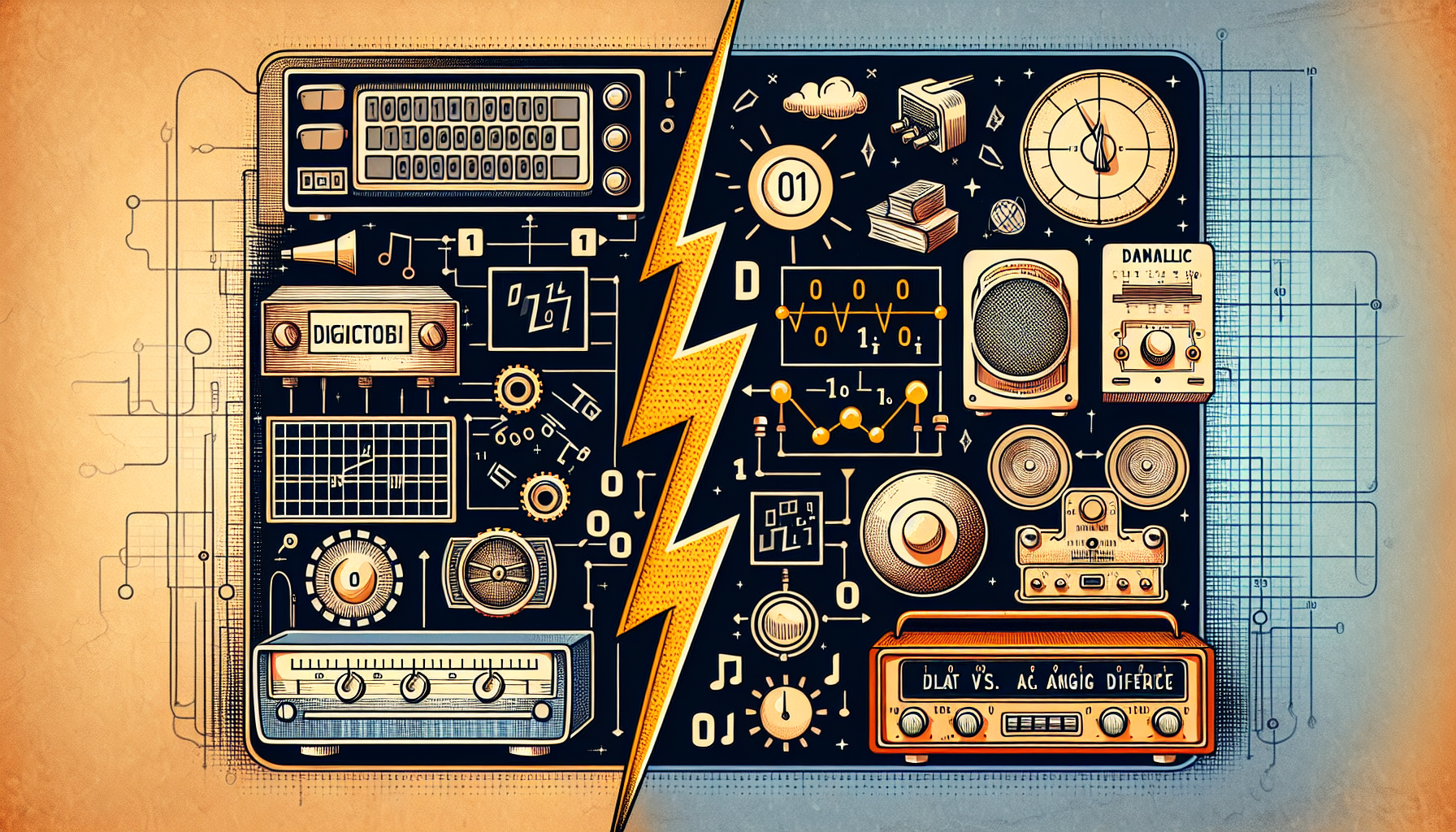
1.1 Introduction to Digital Electronics: Digital vs. Analog Differences
Understand the key concepts and practical applications of 1.1 Introduction to Digital Electronics: Digital vs. Analog Differences in digital electronics, including definitions, examples, and exam tips.
Explore the core ideas of the digital electronics topic titled “1.1 Introduction to Digital Electronics: Digital vs. Analog Differences”. This field is fundamental for electronics and enables in designing digital circuits.
Here you will find a thorough overview:
Introduction
Digital electronics play a pivotal role in modern technology, from computing systems to communication networks. Understanding the fundamental differences between digital and analog electronics is crucial for IT professionals, system officers, and those working in banking automation, as these principles underpin many electronic devices and systems we rely on today. This article aims to elucidate these differences, their implications, and applications in a structured manner.
Detailed Explanation
1. Digital Electronics
Digital electronics operate using discrete signals—specifically, binary values of 0 and 1. These systems rely on logic gates to perform operations, enabling the creation of complex circuits for computing and data manipulation.
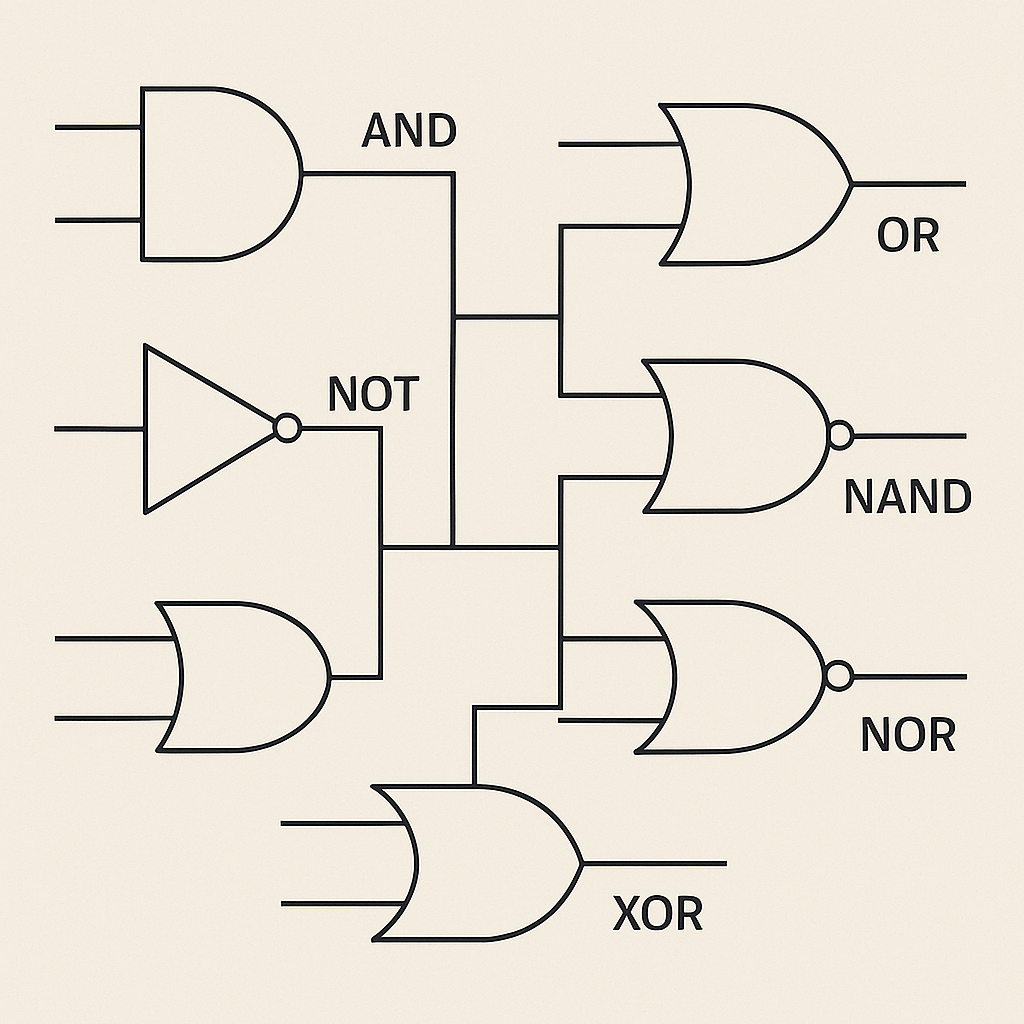
Logic Gates: Basic building blocks of digital systems, including AND, OR, NOT, NAND, NOR, XOR, and XNOR gates. Each gate performs a specific logical operation on input bits.
2. Analog Electronics
Analog electronics, in contrast, deals with continuous signals that can vary over a range. These signals can take any value within a given range and are represented by sine waves or other continuous functions.
Characteristics: Analog signals are subject to noise and distortion, making them less reliable for precision applications compared to digital signals.
3. Key Differences Between Digital and Analog Electronics
Feature
Digital Electronics
Analog Electronics
Signal Type
Discrete (0s and 1s)
Continuous (varies over a range)
Noise Resistance
High, due to the quantization of values
Low, more susceptible to interference
Complexity
More complex, requires logic gates
Typically simpler, uses passive components
Applications
Computers, smartphones, digital clocks
Audio equipment, radio, and television
Data Integrity
High, data can be accurately stored & retrieved
Low, susceptible to signal degradation
4. Importance of Digital Electronics in Modern Applications
IT Systems: Digital systems utilize binary logic to process data, leading to faster and more efficient computing. For example, server farms use digital circuits for data management.
Banking Automation: Banking systems rely heavily on digital electronics for transaction processing, data encryption, and financial modeling, ensuring security and speed.
Everyday Devices: Items such as digital clocks, televisions, and smartphones use digital electronics to deliver precise information and functionalities.
Examples
Digital Cameras: Convert light signals into digital data to capture images, allowing for high-quality adjustments and easy sharing.
Smartphones: Utilize digital circuits for processing phone calls, text messages, internet browsing, and running applications.
Summary
Understanding the differences between digital and analog electronics is essential for anyone in the technology field. Digital systems offer reliability and higher data integrity, making them indispensable in various applications, including IT and banking automation. By familiarizing yourself with concepts such as logic gates, noise resistance, and real-world applications, you can strengthen your foundation in digital electronics.
Tags
digital electronics, logic gates, flip-flops, memory devices, analog electronics, IT systems, banking automation, discrete signals, continuous signals, signal integrity.
For more detailed study, refer to relevant textbooks,
official technical resources, or trusted educational sites.
Browse more related topics in our [Digital Electronics Archives](https://padhaiguru.in/category/digital-electronics/) for in-depth guides and notes.
Stay updated on digital electronics topics and exam tips using hashtags: #Introduction #Digital #Electronics #Digital #Analog #Differences
{Feel free to share|Share your thoughts|Join the discussion|Discuss your views} about this topic in the comments below!
—
For further technical reference, see detailed entries on [Digital electronics fundamentals](https://en.wikipedia.org/wiki/Digital_electronics) and [Fundamental logic gate types](https://en.wikipedia.org/wiki/Logic_gate).